
Schools have been a cornerstone of dairy checkoff work for more than 100 years. In fact, Dairy MAX has driven more than 8 million incremental milk pounds so far in 2026 through schools in our region, which is approximately 15% of all milk pounds we’ve driven this year. That's enough demand to fill about 120 additional milk tankers, or about 31,000 additional school milk servings per day.
So how did we get there?
A New, Holistic Approach to Dairy in Schools
One major achievement came from a partnership with Dairy Management Inc. (DMI) last year, which created a program called Smart Swaps. The program focuses on creating more opportunities for dairy to show up in school meals outside of milk.
School nutrition professionals are facing an uphill battle: tighter restrictions (both current and proposed) on sodium and added sugars. These restrictions make it increasingly difficult to fit flavored milk on the tray, which research shows is vital to students’ uptake of milk.
“Because of changing federal standards, the job of a school nutrition professional is becoming increasingly difficult,” Becky Richardson, Dairy MAX’s vice president of partner and program growth, said. “We have to become a trusted partner and problem-solver to continue increasing use of dairy in these schools, and Smart Swaps is one of the tools we have to do so.”
While checkoff is still working with schools and processors to ensure flavored milk meets standards set at the federal level, we’re also building dairy foods’ place in other parts of school meals through the checkoff-created Smart Swaps program. Think cheese used in breakfast calzones and Cuban sandwiches, yogurt used in chicken tikka masala and apple pie overnight oats, and white milk used in go green smoothies and scones.
Smart Swaps provides ready-to-implement resources for school nutrition professionals, going beyond traditional tested recipes. The website provides sample menus with complete nutrient breakdowns, recorded webinars to better learn how to implement recipes and menus, helpful tips and case studies of schools that have implemented the Smart Swaps program so they can see how other school nutrition professionals have succeeded.
“We’re making it as easy as possible for schools to include more dairy in their meals,” Richardson said. “We know all dairy foods are nutrient powerhouses, so it’s important to us that students across our region are getting that high-quality nutrition while also ensuring schools remain a viable sales channel for dairy farmers.”
This new approach to dairy inclusion in school meals ensures dairy remains a staple of school meals well into the future. By increasing adoption of dairy products throughout school meals, it shows up in culturally relevant school meals that students enjoy. Much like the philosophy behind flavored school milk, when students enjoy meals made with dairy products, we create lifelong dairy consumers from a young age.
A Renewed Focus on School Milk
While we are becoming more purposeful in our K-12 strategy to improve dairy inclusion throughout menus, we’re also still highly focused on defending and improving milk’s position in school meals.
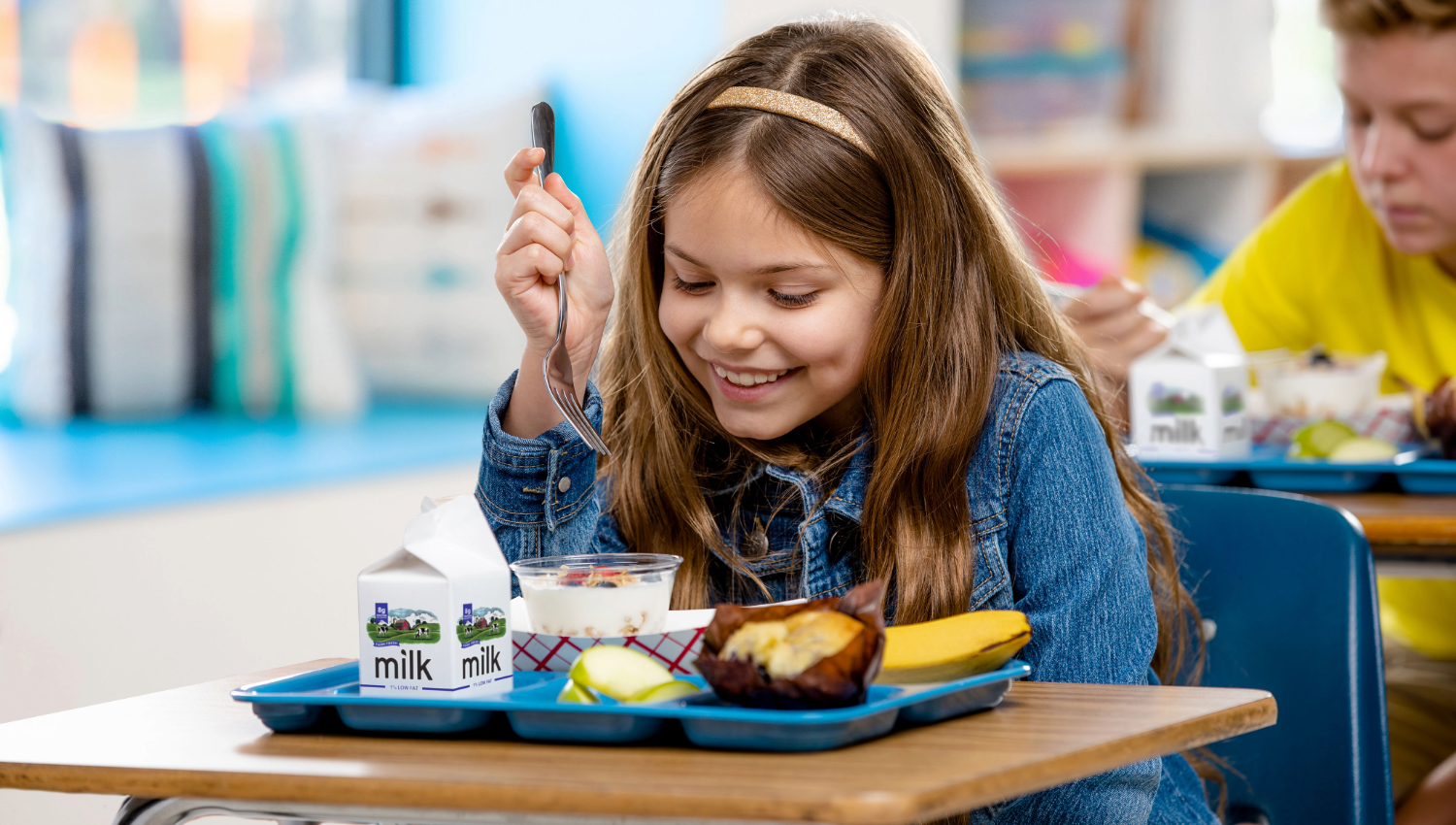
As school started back up this year, nearly a million students in 38 school districts across the Dairy MAX region saw something in meal lines that hadn’t been there last year: whole and 2% milk. With the implementation of the Whole Milk for Healthy Kids Act, which paved the way for bringing higher-fat milk back into schools earlier this year, there’s renewed excitement about school milk, and we’re using that to our advantage.
“We’re tremendously pleased by adoption rates of whole and 2% milk in the first full school year since the Whole Milk for Healthy Kids Act was signed into law,” said Jennie McDowell, CEO of Dairy MAX. “Some of the biggest school districts in our region, like Houston ISD in Texas and Albuquerque Public Schools in New Mexico, have already announced they’ll be offering those higher-fat milk options this year.”
Piloting Higher Fat Milk in Schools
Much of that success can be attributed to the pilots that ran at the end of the 2025-26 school year in conjunction with DMI. The pilots, which ran in four districts within the Dairy MAX region, were an opportunity to determine support, acceptance and challenges. Key learnings from the pilots included:
- Higher-fat white milk captured approximately 5% to 12% of total milk volume.
- Preference for higher-fat milk among white milk drinkers was strong.
- Flavored milk drinkers tended to remain flavored milk drinkers, and the higher-fat white milk option had minimal impact on students' preference.
- Introduction of higher-fat milk didn’t have a significant impact on overall milk volume.
- Students selecting higher-fat milk primarily shifted from other white milk offerings, while flavored milk selections remained stable.
- District feedback highlighted recurring themes around interest from student athletes, alignment with products commonly consumed at home, ease of implementation and sustained selection beyond initial trial periods.
“There were both high and low points in our higher-fat milk pilots in schools, but the most important piece of those is how they showed us where to focus to improve uptake of higher-fat options,” Richardson said. “Our biggest opportunity is more promotion and education, both for districts and students.”
Increasing Higher Fat Milk Adoption in Schools
Recognizing these learnings and the success higher-fat milk can have, the Dairy MAX team has hit the ground running. Our strategy is to remove friction and barriers for districts, encourage more districts to offer higher-fat milk options, and urge students to choose those options. Here’s how we’re accomplishing that:
- Educating districts on the success of higher-fat milk options in pilot studies.
- Distributing and promoting toolkits to guide districts through the process of offering higher-fat milk options.
- Offering posters, refrigerator door clings and table tents that encourage students to choose higher-fat milk options for meal lines and cafeterias.
- Providing educational resources for students and families about whole milk’s benefits.
- Ideating promotions with school districts to increase whole and 2% milk uptake from students.
- Collaborating with processors across our region to ensure districts that want to offer higher-fat milk have the supply to do so.
And we have science on our side showing the benefits of whole milk for children. A recent study from the University of Toronto found that children who consumed whole milk had a reduced rate of obesity compared to counterparts who consumed skim milk. These studies drive home the message to school districts that offering whole milk aligns with positive health outcomes.
Additionally, under the Whole Milk for Healthy Kids Act, fluid milk does not count toward daily saturated fat limits in school meals. This exemption makes it far easier for districts to offer higher-fat milk options.
Reinvesting in Rural Communities
Our work with school milk extends beyond major school districts.
Through our Fueled by Farmers program, we offer commercial beverage refrigerators to eligible schools in communities with strong ties to dairy production. We also provide the schools with a $2,500 grant to purchase milk for the refrigerators, and schools are expected to continue filling the refrigerators with milk after the grant is expended.
“We created the Fueled by Farmers program to ensure rural, dairy-heavy communities weren’t left behind,” McDowell said. “It’s just as important—if not more so—for rural students in heavy dairy production areas to realize the benefits of milk as it is for students in our major metro areas.”
The program improves access to milk for student athletes’ recovery, but it also highlights local dairy farmers’ commitment to their communities. Each school receiving a refrigerator and grant holds a ribbon-cutting event with a local dairy farmer in attendance, strengthening farmers’ ties to the school and creating an opportunity to showcase how farmers give back to their community.
To date, results have been promising for encouraging more milk consumption among rural student athletes:
- More than 15 dairy farming communities have received a refrigerator and grant.
- More than 2,000 students gained direct access to more milk.
- 100% of refrigerator placements have received local media coverage.
As we move into the 2027 calendar year, we’re continuing to look for new opportunities to grow the Fueled by Farmers program, like providing broader assistance to the whole school rather than focusing solely on athletic programs. That may look like smoothie kits similar to those offered to our larger school districts.
No matter what the future of the program looks like, the goal remains the same: increase access to and consumption of dairy in the communities closest to dairy farmers.
The Bottom Line
Schools are a vital piece of Dairy MAX’s work, and remaining relevant in that channel requires innovative approaches. We are continually evaluating how we can make the biggest impact in schools and making changes to ensure we do just that.
From large programs to increase dairy foods in meals, like Smart Swaps, to ensuring rural schools near dairy production areas have resources to offer more milk, schools are vital to the dairy checkoff’s promotion portfolio. While our work may look different, the impact is just the same: show students that dairy is delicious, nutritious and a food fit for lifelong consumption.